Challenge
Designing a game for children means the rules have to be readable before anyone explains them. With no access to the actual audience and one day to deliver, every decision had to work on the first pass.
Process
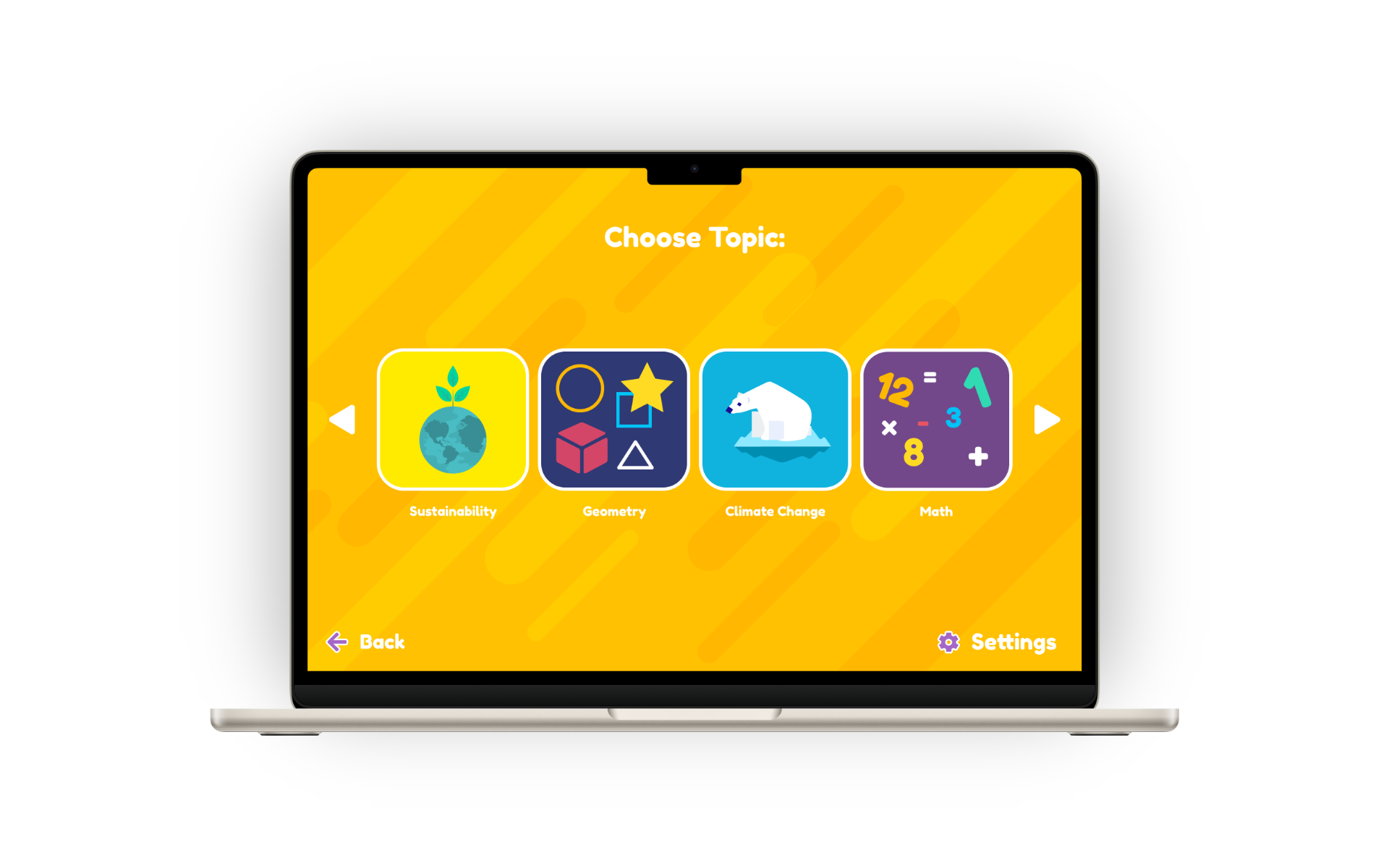
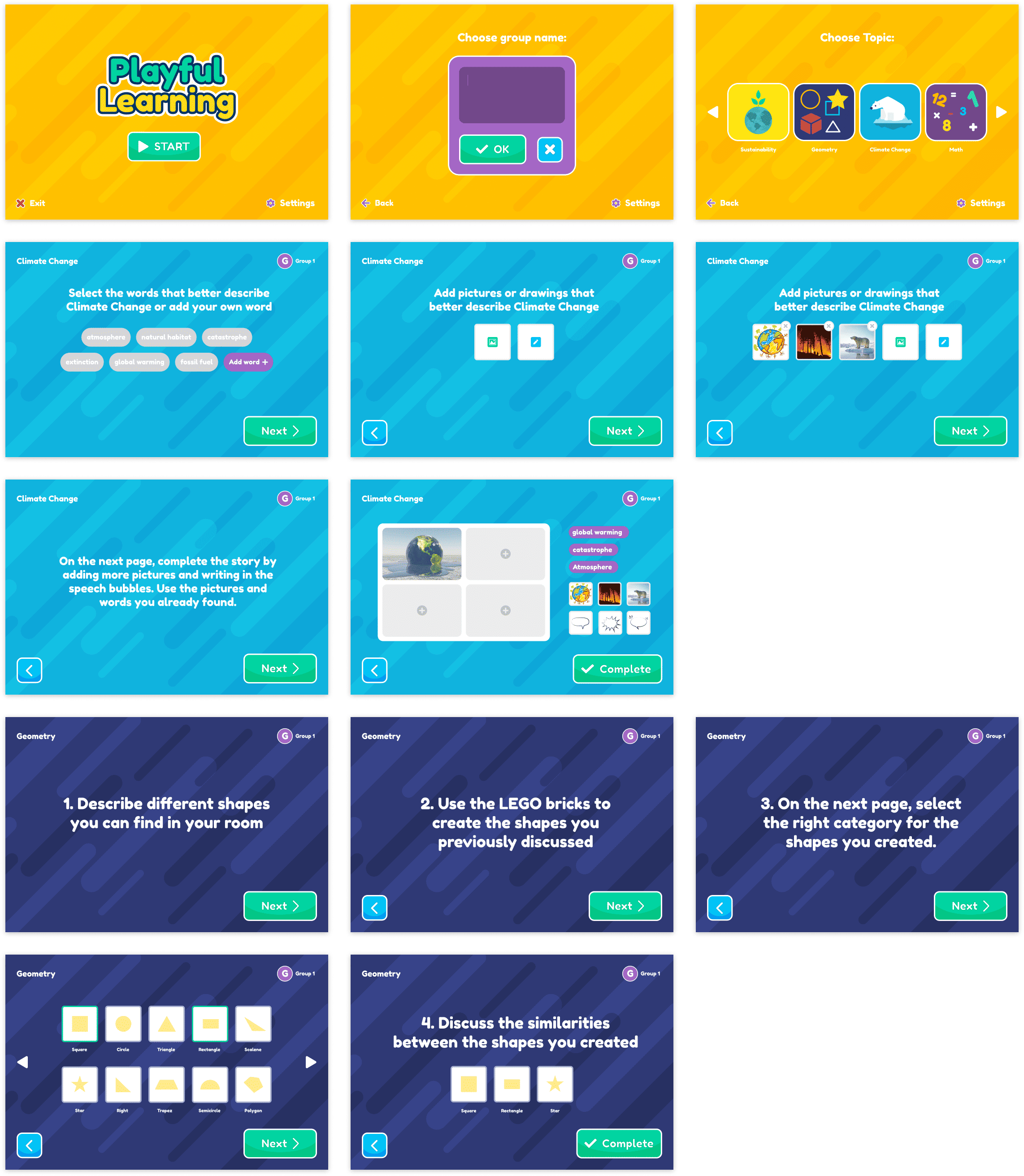
We set the visual system first: bold colours per topic module, rounded components, oversized touch targets. Every screen follows the same structure: one instruction, one action, one forward step. The game logic builds progressively, with words and images collected in earlier rounds carried into the final activity, so children can see their choices become the story.
Outcome
We delivered an interactive Figma prototype in a day without testing with children. What it demonstrates is the ability to design for a non-standard user under time pressure and keep a consistent, coherent system across structurally different game mechanics.