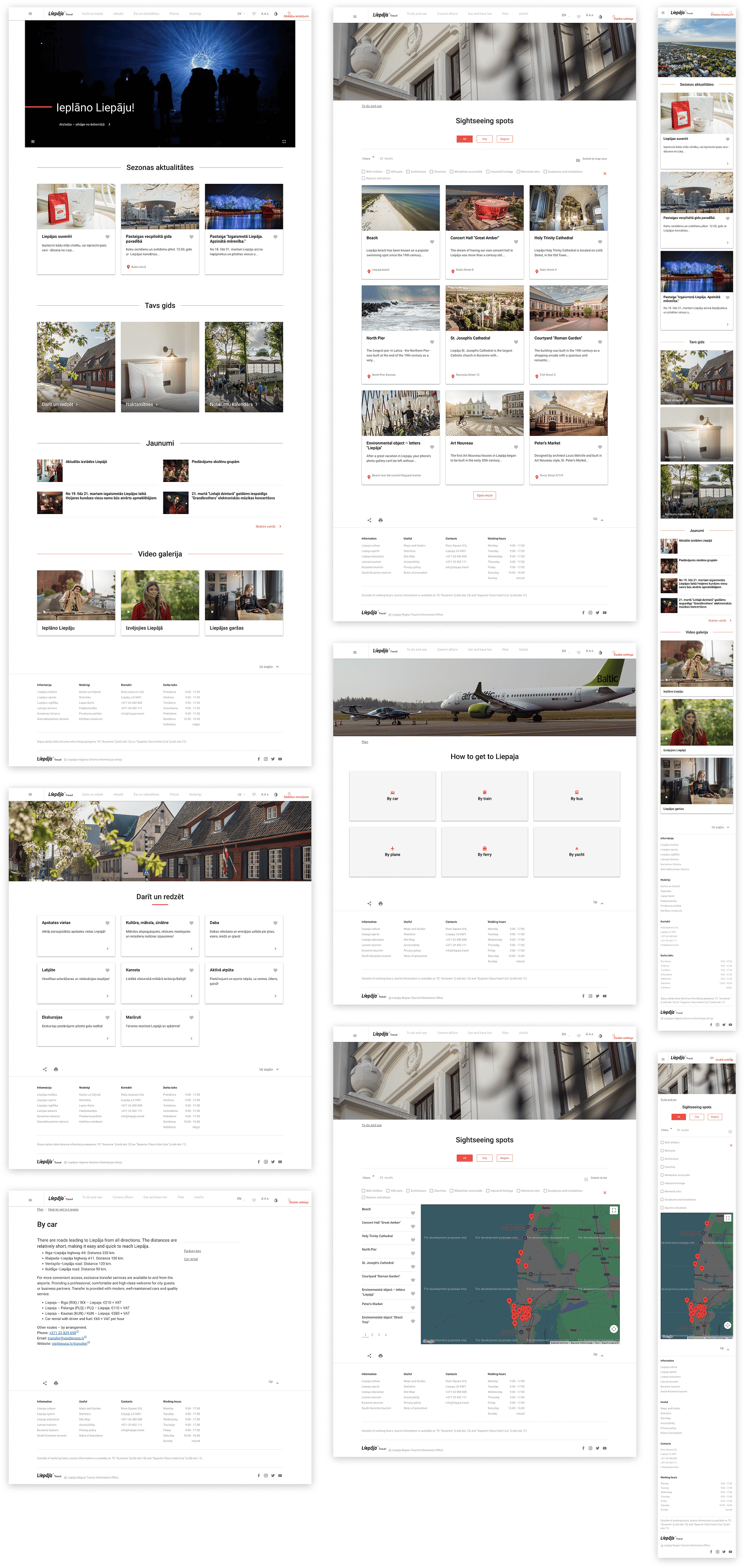
Challenge
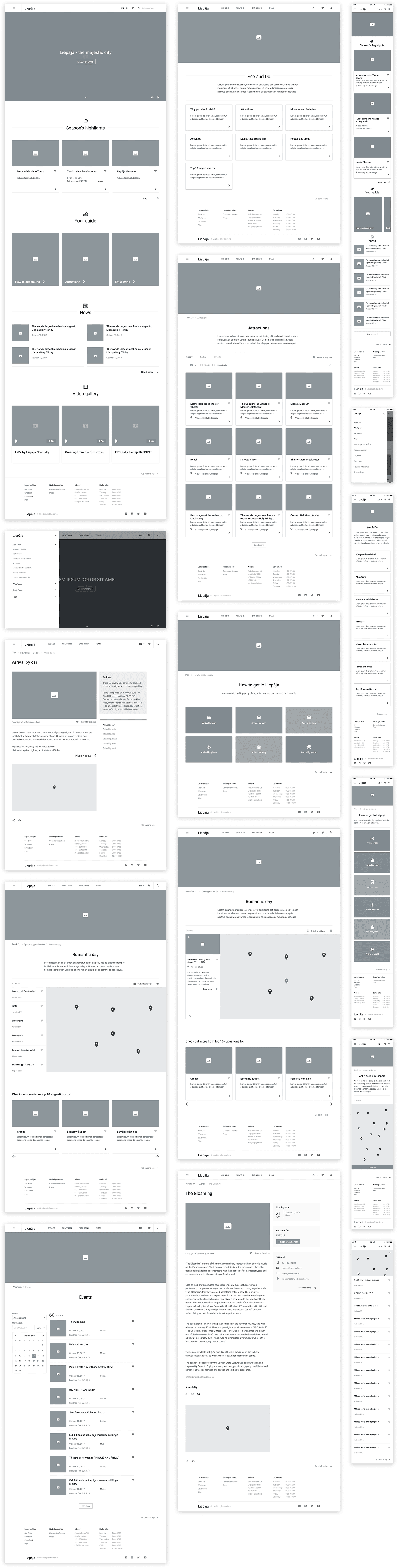
The approach was deliberate: high-fidelity wireframes first, close enough to the final product that structure, hierarchy, and content layout could all be evaluated before any visual design decisions were locked in. That methodology demands precision at the wireframe stage. A rough sketch can hide structural problems behind its own looseness. A high-fidelity wireframe cannot. Every layout decision is visible, and every weak one shows.
For an intern three months into a professional environment, that was the real constraint. The brief was clear, and the senior designer was available, but the wireframes had to be production-quality work, not learning exercises.
Process
I worked from the site's content structure and the senior designer's direction, producing wireframes across the full page set for both desktop and mobile. The approach followed Google's Material Design conventions, which gave the layout system a clear reference point and kept decisions grounded rather than open-ended.
The wireframes defined content hierarchy, navigation behaviour, filter logic, and card structures in full. The mobile layouts required those same decisions to be resolved for a constrained viewport, which meant revisiting the structure rather than simply resizing it.
Outcome
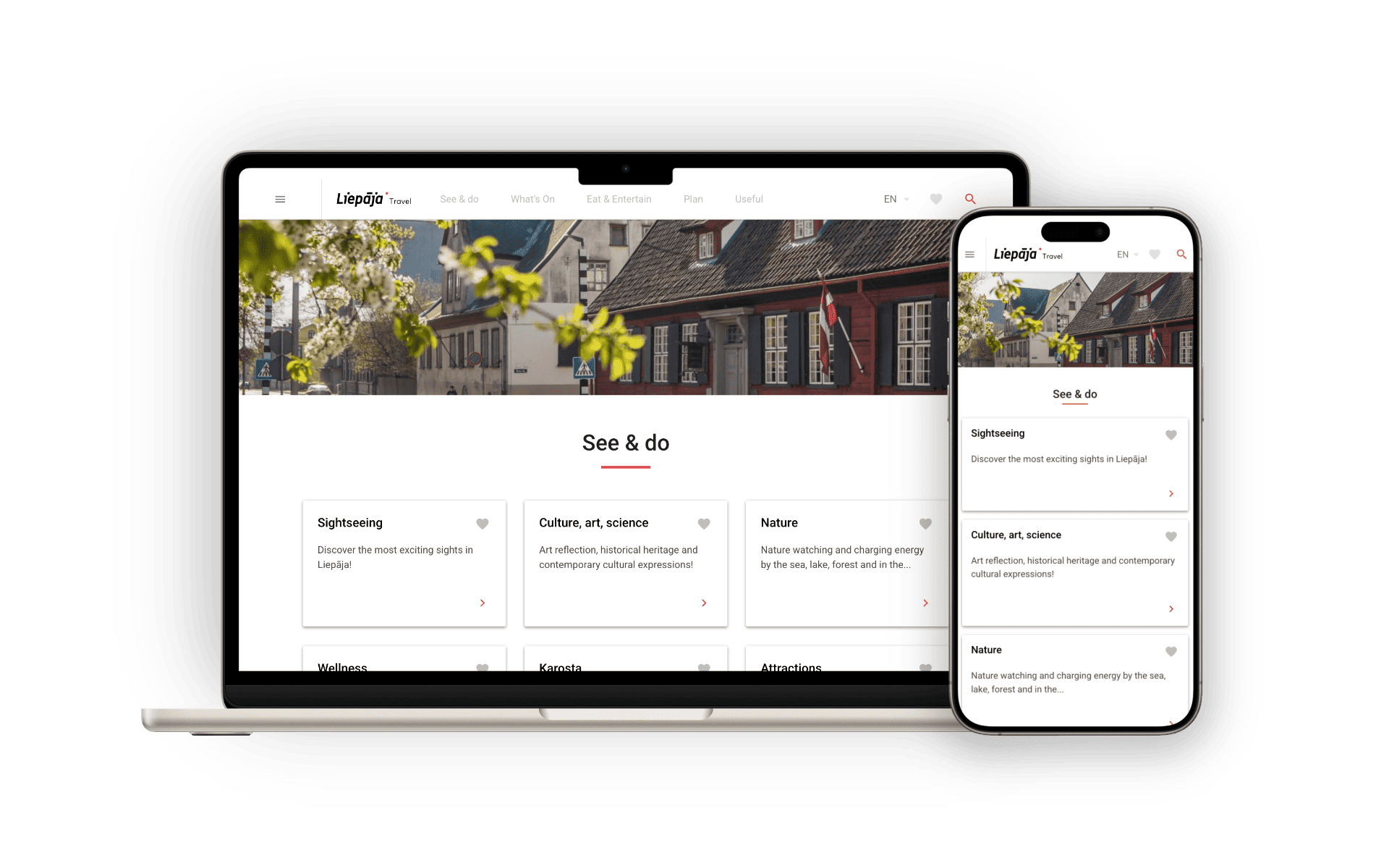
The wireframes were approved and used as the foundation for the final product. The navigation model, page templates, and content hierarchy I produced at the wireframe stage carried through into the implemented site.